



SMS marketing
for business
SMS marketing for business owners who need a message read today, not next week. Appointment reminders, a spot that just opened, an order ready for pick-up. I set up the tool, the consent and the messages, and keep the volume low enough that people do not reach for STOP.
Free: a 30-minute call, an action plan and a price range in writing.
Five jobs a text message
does better than email
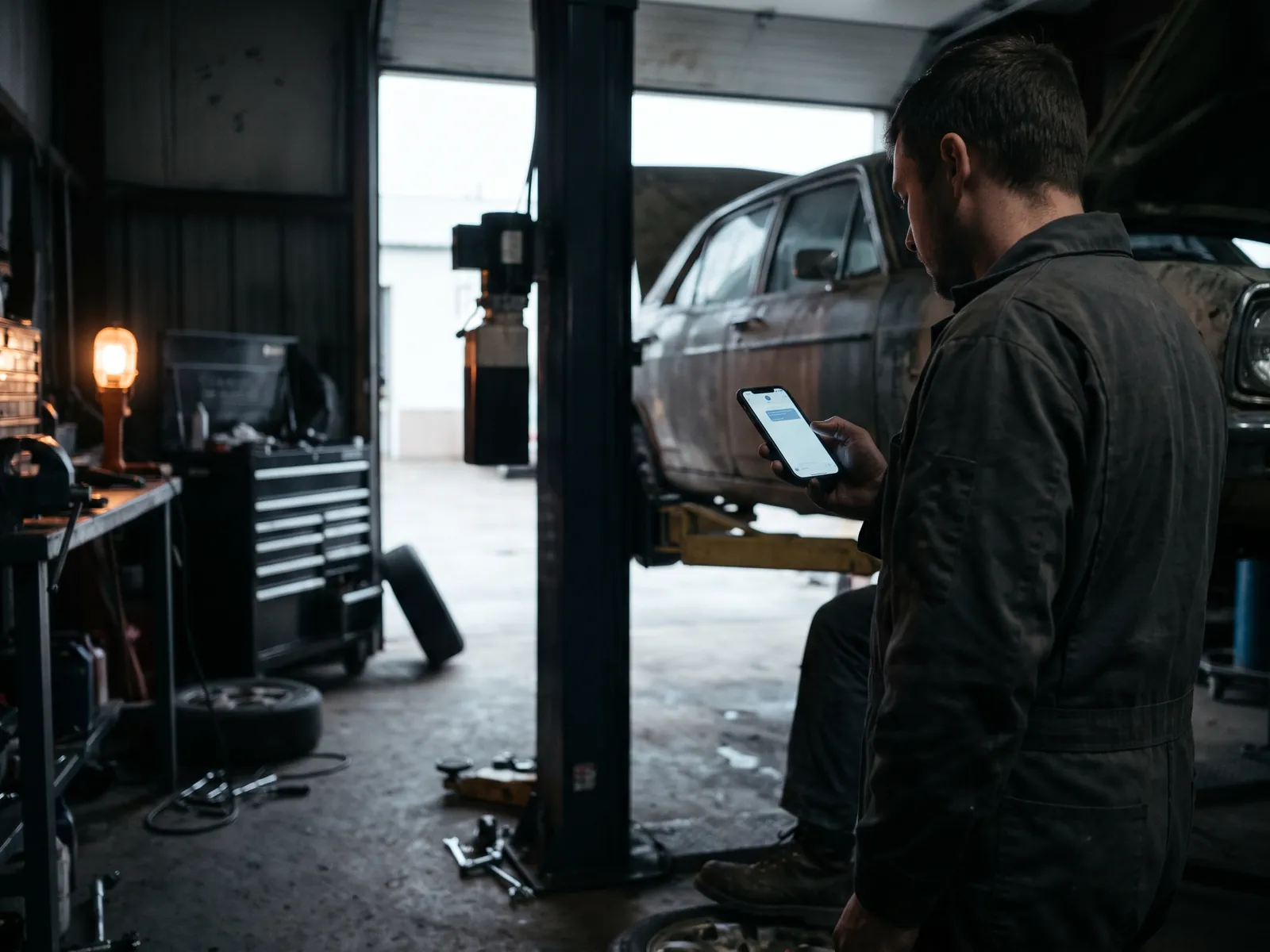
A message the day before a booking, with the time, address and a way to reschedule. Clinics, salons, mechanics and tutors use this most.
A cancellation at 2 pm? A short text to a small group of regulars often fills it before the afternoon is out.
Repairs, alterations, click-and-collect orders. One line saves a phone call each way.
A rainy-day special, a weekend market stall, the last few spots in a school holiday program. Sparingly.
Customers reply Y to confirm or ask a quick question. Replies land in your CRM or inbox, not on one staff member's phone.
An email series
that works for you
After signing up, customers get the next messages at the right moment, and you see what they opened and clicked.
- Welcome and tips
- An offer on the right day
- Reminder about the next appointment
SMS running
in about two weeks

SMS marketing
pricing
SMS setup is quoted individually, since it depends on your volume and which systems need connecting. Message credits are paid by you directly to the SMS provider. Prices are in Australian dollars.
Provider, consent, reminders and templates, set up and tested.
- Provider chosen and opened in your name
- Reminder and confirmation automation
- Opt-out handling
- Link to your CRM or booking tool
We check whether SMS makes sense for your business at all.
- No obligation
- Zoom in your morning or evening
Why SMS marketing for business still works
SMS marketing for business has one advantage nothing else matches: people read text messages, usually within minutes. Inboxes are crowded and social posts get buried, but a short text from a business you know tends to be opened. That is also its risk. Because SMS feels personal, a careless campaign annoys people faster than a careless email.
I treat SMS as a precision tool. It sits beside your email marketing, not in place of it: email for the regular rhythm and longer content, text messages for anything short and time-sensitive.
The Spam Act applies to texts too
The Spam Act 2003 covers commercial SMS and MMS just as it covers email, and ACMA enforces it. Three rules apply to every marketing text:
- Consent. Express, such as a ticked box at booking, or inferred from an existing relationship. Buying a list of numbers is a fast way into trouble.
- Identification. The message must make clear which business sent it. A sender name helps, but the text itself should name you too.
- Opt-out. Every commercial message needs a simple way to unsubscribe, commonly "Reply STOP", and opt-outs must be honoured within five working days.
Note that the Do Not Call Register covers telemarketing calls, not texts. Text messages are governed by the Spam Act. I keep a record of consent for every number in your list, so you can show where it came from. This is general information, not legal advice; the guide on SMS marketing rules in Australia has more detail.
Reminders first, campaigns second
The quickest win for most service businesses is not a promotion at all. It is an automatic reminder the day before an appointment. For clinics, physios, salons, mechanics and tutors, a missed booking is lost income that cannot be resold. A reminder with an easy way to reschedule gives the slot a second life.
Once reminders run smoothly, occasional campaigns make sense: a quiet Tuesday, the start of school holidays, a new menu, a seasonal service like heater checks before winter in Victoria or Tasmania. Short, specific and to a list that asked for it.
Choosing an SMS tool
You have three broad options:
| Option | Good for | Watch out for |
|---|---|---|
| SMS built into your booking or practice software | Reminders only | Limited campaign features |
| SMS inside your email platform | Shops already using Klaviyo or similar | Pricing per message varies |
| A dedicated SMS provider | Two-way messaging, higher volume | One more tool to manage |
Australian providers such as ClickSend and MessageMedia are common choices, and many email platforms now include SMS too. I pick based on what you already use, so you do not end up with a pile of subscriptions. The account is registered in your name and message credits are billed to you directly.
Connecting SMS to your customer data
Texts work best when they are triggered by real events: a booking made, a job finished, an order shipped. That requires your SMS tool to talk to your CRM or booking system. If bookings come in through chat, a booking bot can collect the mobile number and consent at the same time, so reminders follow automatically.
Mistakes that cost you subscribers
- Sending the same promotion by email and SMS on the same day.
- Long messages that split into three parts and arrive out of order.
- Links to slow pages that do not work well on a phone.
- Texting at 7 am because the scheduler was set to the wrong state.
All four are easy to avoid with a bit of setup. If you would like a second opinion on what you send now, a one-on-one consultation is a quick way to get it.
Works well with
SMS
questions
Do appointment reminders need marketing consent?
A plain reminder about a booking the customer made is generally treated as a service message rather than marketing. Once you add a promotion, such as 'book your next visit and get a free add-on', it becomes commercial and the Spam Act rules apply: consent, sender identification and an opt-out. I keep reminders and promotions separate so you never have to wonder which is which.
How many marketing texts can I send before people opt out?
There is no magic number, but restraint pays. For most local businesses, one or two promotional texts a month is plenty, on top of service reminders. People tolerate texts that are useful to them and lose patience with anything that feels like a flyer. I watch opt-out rates after every send and slow down if they climb.
Can customers reply to the messages?
Yes, if you use a two-way number. Replies can go to an inbox, a shared team view or straight into your CRM against the customer's record. That is handy for confirmations and quick questions. One-way sender names look tidier but cannot receive replies, so I pick based on what you need.
What should an SMS say?
As little as possible: who you are, the one thing you want them to know, a link or a time, and the opt-out. A standard SMS fits 160 characters. Emoji and some special characters shrink that limit and can split a message in two, which usually costs double. I write every template to fit in one segment where I can.
What time of day should texts go out?
There is no single rule in the Spam Act, but common sense is a good guide: business hours in the customer's own time zone, and never early in the morning or late at night. I schedule by state, so a text meant for 10 am arrives at 10 am in Perth as well as in Brisbane.
Fewer no-shows
starts with one reminder
Tell me which booking or sales system you use and how many customers you text now. I reply within one business day. Or book a free 30-minute call first.