Leads sold to four installers
You pay for a lead, call within an hour, and the customer has already had three other calls. It's a race to the lowest price.
Lead buyingAds and visibility: customers who are looking for your service now or don’t know about it yet.
01 Google AdsEnquiries from people searching for your service right nowfrom $800/mo 02 Social media adsMeta, TikTok, LinkedIn: customers who are not searching yetfrom $800/mo 03 SEOHigher in Google and Maps without paying per clickfrom $690/mo 04 Visibility in ChatGPT and AIYour business in AI assistant answerspart of SEO 05 Amazon, eBay and marketplacesSell where customers already buywith a partnerThe place where a visit turns into an enquiry, and a system that doesn’t lose that enquiry.
01 Web designA website that turns visits into enquirieslanding from $750 02 Online storesCart, payments and shipping, ready for adsfrom $2,300 03 CRMNo enquiry gets lost in a phonesetup $1,100 04 Chatbots and AIThey answer customers, at night too$550 05 Email and SMSCustomers come back instead of forgetting youquoted individuallyPlan and tracking first, budget second. You know what works before you spend more.
01 Strategy and auditKnow where to spend the budget before you spend it$700 02 AnalyticsSee which ad brings in money$470 03 ConsultationsA call about your specific problem$35/h 04 Free auditA quick review and 3–5 priorities to start$0How your business looks and sounds before anyone calls you.
01 Social media managementProfiles that look like a real businesswith a partner 02 Creative and videoGraphics and videos that stop the thumbquoted individually 03 BrandingA logo and style that sets you apartwith a partner Edmonton, Canada
website with a 3D calculator and a CRM
Boreal Kitchens
 Winnipeg, Canada
website and CRM in one system
Adela Strycharz, REALTOR®
 Żywiec, Poland
500+ page website and CRM for a chain
Gładko Tnący Barber
 Warsaw, Poland
website in 4 languages, calculators and CRM
MagCleaning
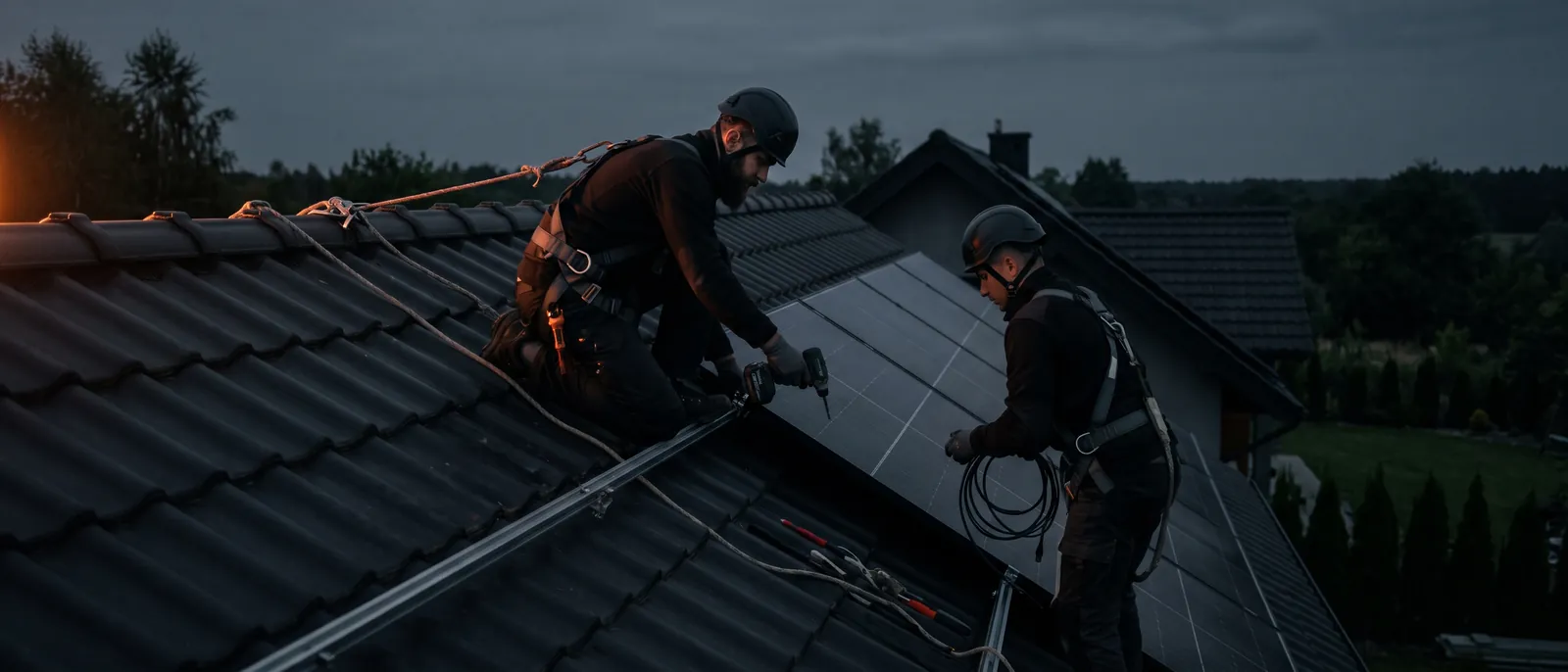
Marketing for solar installers who are tired of paying for leads that three competitors also bought. I build your own funnel for home batteries, with honest pages and a CRM that follows up.
Free: a 30-minute call, an action plan and a price range in writing.
You pay for a lead, call within an hour, and the customer has already had three other calls. It's a race to the lowest price.
Lead buyingHomeowners remember aggressive telemarketing and pushy quotes. Your marketing has to feel calm and credible.
ReputationCustomers think about it, compare, wait for a bill. Without follow-up, they buy from whoever called last.
Long cycleBefore calling, customers read reviews. I help you collect them and reply in a way that builds trust.
How systems work, sizing, typical payback factors, rebate eligibility explained with links to official sources.
A form that asks for the electricity bill and roof details, so you quote accurately and pre-qualify.
For 'solar battery installer', 'solar panels' plus city and similar intent searches, with negative keywords to keep out job seekers and DIYers.
Every quote tracked, follow-ups scheduled, helpful emails sent with consent while the customer decides.
Real reviews from installed customers, answered properly, on Google and the review sites solar buyers read.
Price calculators with a 3D model, city pages, SEO and every enquiry in a CRM. A long-cycle, quote-based sale like solar.
See the case study →A 445-page website in four languages with order calculators, a custom CRM and full analytics.
See the case study →A website with solar and battery pages, Google Ads setup and analytics.
Website, Google and Meta setup, CRM setup and analytics. Then $1,480 a month.
A review of your lead sources, costs and close rates, with a plan.
Your current lead sources, costs per sale and capacity.
Which sources make money and which don't, and the plan to replace the worst.
Website, funnel, CRM, ads. All in your name.
Ads adjusted every two weeks, monthly report on quotes and installs.
Australia has one of the highest rates of rooftop solar in the world, and the installer market is crowded. Many installers rely on lead generation companies that sell the same enquiry to several businesses. It works, sort of, until margins shrink to nothing. Marketing for solar installers is healthier when you build your own flow of exclusive enquiries: people who found you, read about you and asked you for a quote.
Since the federal battery program started in July 2025, home batteries have become a big search topic. Many homeowners who already have panels are now looking at storage, and many with older systems are considering upgrades. That's a different customer from the first-time solar buyer: they know the basics, they have a bill history and they want to compare battery options honestly. Pages that explain battery sizing, compatibility with existing inverters and how the rebate generally works answer exactly what they're searching.
A Google search campaign with careful negative keywords, landing pages per product and conversion tracking is usually the fastest way to start generating exclusive leads. Over time, SEO content about batteries, sizing and upgrades brings enquiries without paying for every click.
Solar has faced real regulatory attention. The ACCC has acted on misleading claims and unfair selling practices, and ACMA enforces telemarketing and spam rules. Installer accreditation and approved retailer status matter to customers and are often linked to rebate eligibility. Your marketing should show your accreditation details, licence numbers, warranties and after-sales support clearly.
Claims to watch: "free solar", "no bills ever", guaranteed savings and rebate amounts that may not apply. I write copy that explains, gives ranges with assumptions and links to official sources. Calm and specific beats hype, especially with buyers who've already had three pushy phone calls.
Electricity prices usually change around 1 July, and people often look at solar after a big winter or summer bill. Summer heatwaves drive interest in batteries and air conditioning loads. Rebate changes cause rushes before deadlines. Installations slow over the Christmas shutdown. I plan campaigns around those moments and keep the always-on budget modest the rest of the year.
Solar quotes often sit for weeks. A CRM that schedules follow-ups, sends a useful email about financing options or a site visit, and records why a quote was lost will lift your close rate more than any ad tweak. I set it up so your sales team sees every open quote and the next action for each.
I work remotely with installers anywhere in Australia, including sunny markets like Perth and Adelaide where solar is especially popular. Contracts are written, deadlines are agreed, and everything is registered in your company's name.
Explain how the federal small-scale scheme and the battery program generally work, then link to official sources for current details. Rebates change, and amounts vary by system and location. Overstating them is misleading under Australian Consumer Law and invites complaints.
Only with care. Payback depends on usage, tariffs, system size and the roof. If you show estimates, label them as estimates and explain the assumptions. I'd rather show a sample calculation with clear inputs than a headline number.
Telemarketing to numbers on the Do Not Call Register is generally restricted, and unsolicited selling has strict rules on timing and cooling-off periods. ACMA and the ACCC have both acted against solar marketers. Inbound marketing avoids those risks completely.
Rarely overnight. A typical path is to run your own search campaigns alongside bought leads, compare cost per installed system, then shift budget as your own channel proves itself. SEO adds to that over months.
Tell me your region, products and current lead sources. I reply within one business day, or book a free 30-minute call.
What do you need most?