



One-page marketing plan
A one-page marketing plan fits who you sell to, what you offer, which channels you use and what you'll measure on a single sheet. Here's how to fill in every box.
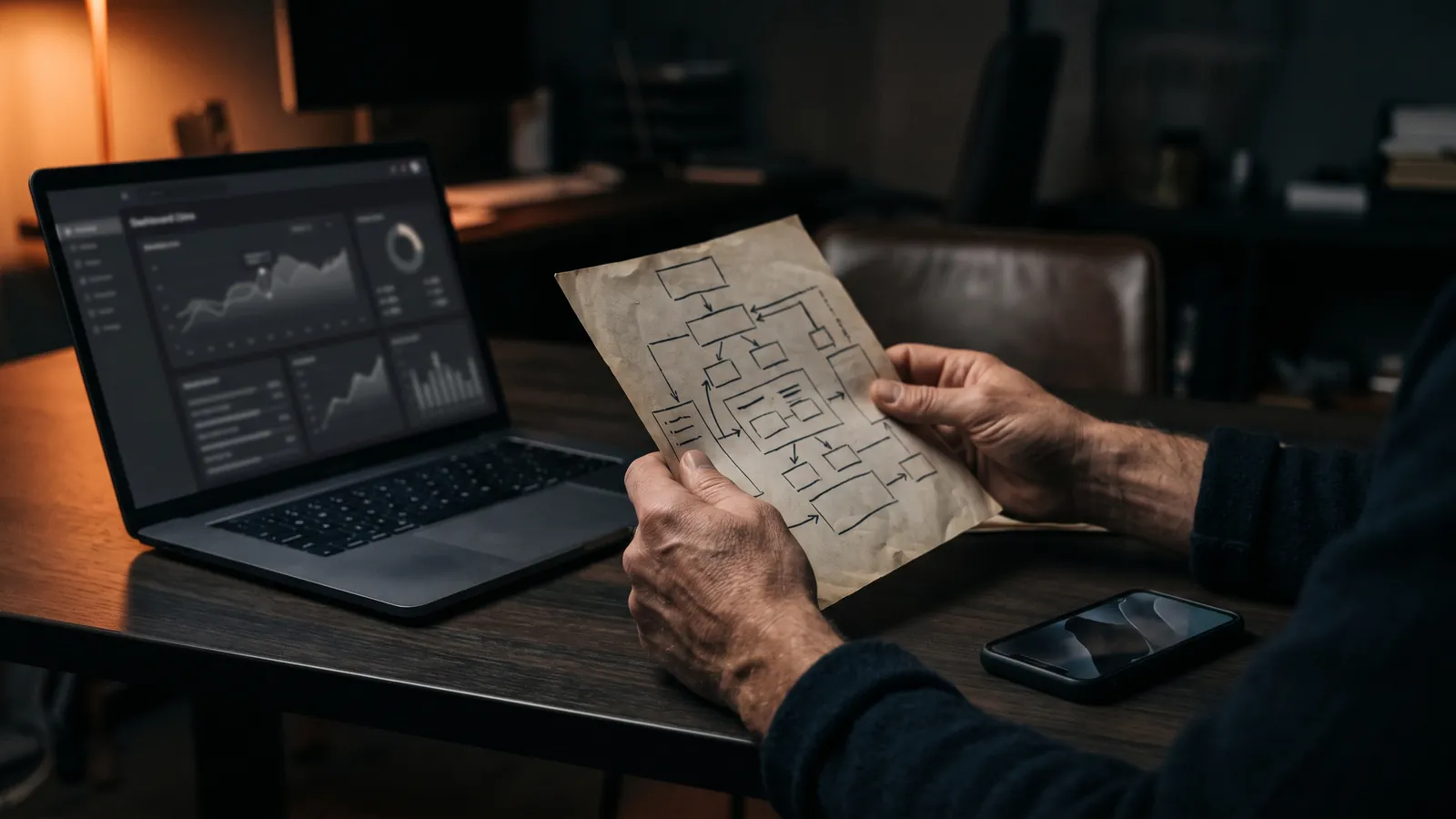
A one-page marketing plan is a single sheet that answers nine questions: who you sell to, what problem you solve, why people should choose you, what you charge, where you will reach customers, how you turn interest into enquiries, how you turn enquiries into sales, how you keep customers coming back, and which numbers you'll check each month. If it doesn't fit on one page, it's too vague or too ambitious for a small business.
Most owners don't need a 40-page strategy document. They need a plan they actually read on a Monday morning, that a new staff member can understand in five minutes, and that stops them saying yes to every advertising salesperson who calls. Below are the nine boxes, a worked example and the mistakes I see most often.
Why one page beats a thick document
Long plans get written once and filed. A short plan gets used. It forces you to choose: one main customer instead of "everyone", two channels instead of seven, three numbers instead of a dashboard of thirty. Those choices are the actual strategy. Everything else is detail.
A single page is also easy to share with whoever helps you, whether that's a staff member, a web developer or an ad specialist. When everyone works from the same sheet, you stop paying people to pull in different directions.
The nine boxes
Draw a grid of three rows and three columns, or just nine headings down a page.
Before the sale: getting attention
- Target customer. One sentence describing who you most want more of. Not "homeowners", but "homeowners in Brisbane's northern suburbs with older houses who want a bathroom renovated before selling". My guide on defining your target customer walks through this with Australian examples.
- The problem and your offer. What they are trying to fix, in their words, and what exactly you sell to fix it.
- Why you. One or two reasons a customer would pick you over the alternatives, including doing nothing. If you struggle, read my USP examples for service businesses.
During the sale: turning interest into revenue
- Channels. Where your target customer will meet you. Pick one or two to start: Google Search, Google Maps, Instagram, a local Facebook group, a referral partner.
- Capturing enquiries. What happens when someone is interested: a phone number, a booking form, a quote request, a WhatsApp chat.
- Converting. How an enquiry becomes a paying customer: response time, quote follow-up, a phone script, a deposit.
After the sale: keeping and growing customers
- Delivering a great experience. The small things that make people talk about you: on-time arrival, a clear invoice, a follow-up call.
- Repeat business and referrals. Reminders, service intervals, a way to ask for reviews and referrals.
- Numbers to watch. Three to five figures you'll check monthly, such as enquiries, conversion rate, cost per customer and revenue from new customers.
A worked example: a café in Brisbane
This is an illustration, not a real client.
| Box | What the owner wrote |
|---|---|
| Target customer | Office workers within a 10-minute walk who buy coffee and lunch on weekdays |
| Problem and offer | Want a fast, good lunch without queueing; pre-order online, pick up in 2 minutes |
| Why us | Order ahead by 11:30, guaranteed pickup slot, menu that changes weekly |
| Channels | Google Business Profile, Instagram, flyers to nearby office receptions |
| Capture | Online ordering page linked from Google and Instagram bio |
| Convert | First pre-order gets a free coffee card stamp |
| Experience | Name on the bag, order ready on time |
| Repeat and referrals | Weekly menu SMS to customers who opted in; ask regulars for Google reviews |
| Numbers | Weekly pre-orders, repeat orders, new Google reviews, lunch revenue |
Notice what's missing: TikTok, a podcast, a rebrand. Those might come later. For now the plan focuses on lunch pre-orders from people nearby.
How to fill it in without overthinking
Set aside two hours. Fill every box with your first honest answer, even if it feels incomplete. Then go back and sharpen the vaguest boxes, usually the target customer and "why you".
Use real data where you have it. Look at your last 20 customers in your invoices or booking system. Who were they, where did they come from, which service did they buy? That tells you more than any brainstorm.
Write in plain words. "Get more enquiries from Penrith and St Marys" is better than "increase brand awareness in Western Sydney".
Adding a budget and timing
The plan isn't finished until it has a monthly budget and a calendar. Write the total next to the channels box, and mark the months that matter for your business: EOFY in June, the spring rush, the Christmas shutdown, school holidays in your state. A plumber's plan and a florist's plan look very different in December.
If you're not sure what to budget, start with how much a small business in Australia should spend on marketing.
Sharing the plan with whoever helps you
Print the page and stick it near your desk, or pin it at the top of a shared folder. Send it to anyone who touches your marketing: the person who answers the phone, your web developer, the specialist running your ads. Ask each of them one question: "Which box does your work serve?" If they can't answer, either the plan is unclear or they're working on something that doesn't matter right now.
The plan also protects you from distractions. When a directory, a radio station or a social media agency calls with an offer, compare it with the channels box. If it isn't there and doesn't reach your target customer better than what you already use, the answer is a polite no.
Common mistakes
- Everyone is the target customer. If the first box could describe any business in your industry, it's too broad.
- Channels before customers. Choosing Instagram because a competitor uses it, rather than because your customers make decisions there.
- No capture or follow-up. Plans often stop at "run ads" and skip what happens when the phone rings.
- No numbers. Without them, you can't tell if the plan is working, so it gets abandoned after a bad month.
- Never reviewing it. A plan from two years ago describes a business that no longer exists.
Review it every 90 days
Put a recurring reminder in your calendar. Every quarter, compare the numbers box with reality. Keep what works, cut what doesn't, and change one or two things at a time so you can see the effect.
If you'd like a second pair of eyes, I build this kind of plan as part of a marketing strategy, and I can review your draft on a paid one-on-one consultation at $35 an hour. The first 30-minute call is free.
Let’s talk
about your business
Before the call I review your website and ads. After the call you get an action plan and a price range in writing.

12+ years in online marketing, 100+ clients. I build websites, Google Ads and Meta ads campaigns, CRMs and automations for small and mid-sized businesses. About me →
One-page plan:
questions
How long should a one-page marketing plan take to write?
A first draft usually takes two to three hours if you have your sales data at hand. Sharpening it, especially the target customer and your reasons to be chosen, may take another session a few days later. Don't wait until it's perfect: a usable plan this week beats a perfect plan next quarter.
Is a one-page plan enough for a growing business?
For most businesses with up to about 20 staff, yes, as long as it's backed by a budget and monthly numbers. Larger businesses or those running many channels may need supporting documents for each channel, but the one-page version still works as the summary everyone refers to.
What is the difference between a marketing plan and a marketing strategy?
Strategy is the set of choices: who you target, how you position yourself, where you compete. The plan is how you carry those choices out over the next months: channels, budget, timing and numbers. A one-page plan holds both in a short form, which is why it works well for small businesses.
Want your plan checked
by someone outside?
Send me your draft. On a free 30-minute call I'll point out the boxes that need sharpening and what I'd test first.