Price
Price comparison kills margin
Shoppers compare your price with national chains and online marketplaces in seconds. You can't win on price alone.
Ads and visibility: customers who are looking for your service now or don’t know about it yet.
01 Google AdsEnquiries from people searching for your service right nowfrom $800/mo 02 Social media adsMeta, TikTok, LinkedIn: customers who are not searching yetfrom $800/mo 03 SEOHigher in Google and Maps without paying per clickfrom $690/mo 04 Visibility in ChatGPT and AIYour business in AI assistant answerspart of SEO 05 Amazon, eBay and marketplacesSell where customers already buywith a partnerThe place where a visit turns into an enquiry, and a system that doesn’t lose that enquiry.
01 Web designA website that turns visits into enquirieslanding from $750 02 Online storesCart, payments and shipping, ready for adsfrom $2,300 03 CRMNo enquiry gets lost in a phonesetup $1,100 04 Chatbots and AIThey answer customers, at night too$550 05 Email and SMSCustomers come back instead of forgetting youquoted individuallyPlan and tracking first, budget second. You know what works before you spend more.
01 Strategy and auditKnow where to spend the budget before you spend it$700 02 AnalyticsSee which ad brings in money$470 03 ConsultationsA call about your specific problem$35/h 04 Free auditA quick review and 3–5 priorities to start$0How your business looks and sounds before anyone calls you.
01 Social media managementProfiles that look like a real businesswith a partner 02 Creative and videoGraphics and videos that stop the thumbquoted individually 03 BrandingA logo and style that sets you apartwith a partner Edmonton, Canada
website with a 3D calculator and a CRM
Boreal Kitchens
 Winnipeg, Canada
website and CRM in one system
Adela Strycharz, REALTOR®
 Żywiec, Poland
500+ page website and CRM for a chain
Gładko Tnący Barber
 Warsaw, Poland
website in 4 languages, calculators and CRM
MagCleaning
Marketing for electronics stores that can't win a price war with the giants. I build on what you have that they don't: expert advice.
Free: a 30-minute call, an action plan and a price range in writing.
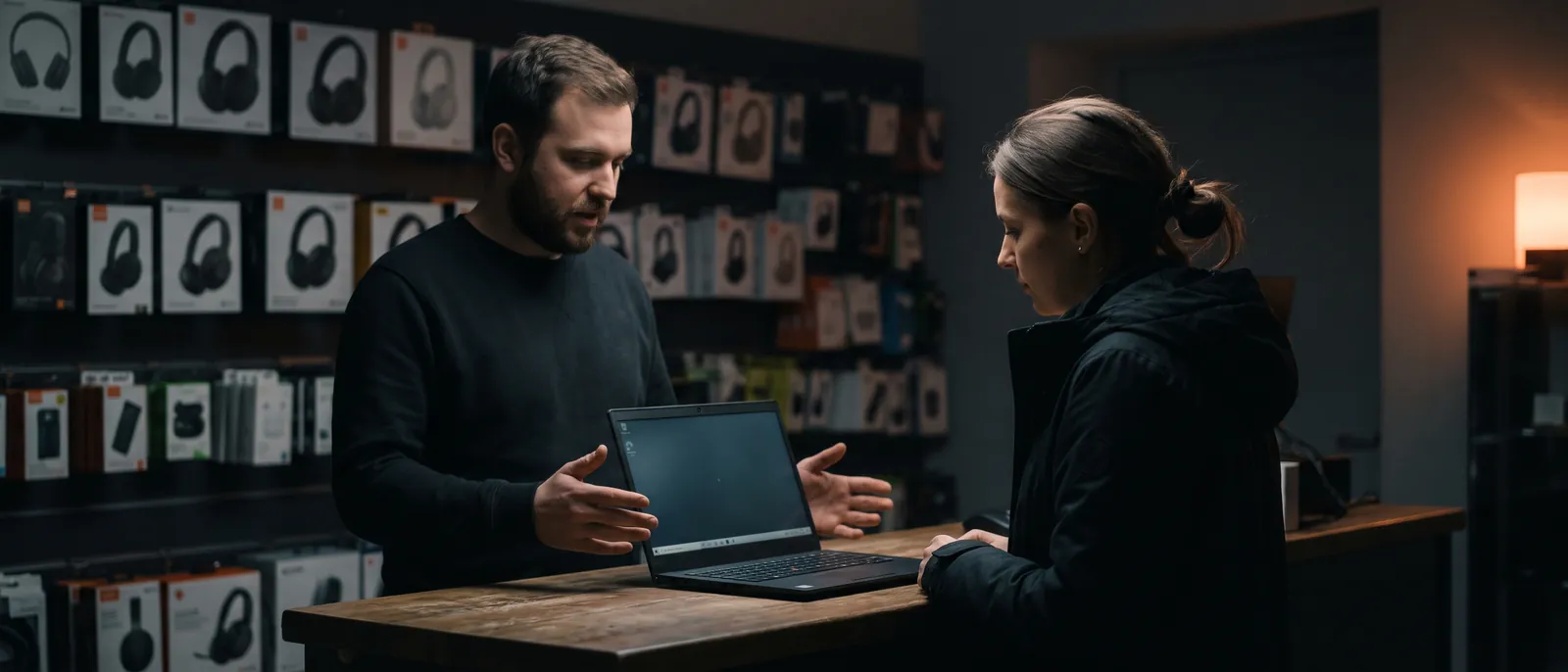
Shoppers compare your price with national chains and online marketplaces in seconds. You can't win on price alone.
The product feed has missing GTINs, wrong prices or vague titles, so ads show for the wrong searches.
You do repairs, setup and data transfers, but the website doesn't say so, so nobody searches you for them.
Before calling, customers read reviews. I help you collect them and reply in a way that builds trust.
A clean feed, campaigns split by margin and brand, and search terms reviewed every two weeks.
Repairs, setup, home theatre installs, business IT support. High margin, local intent, less price comparison.
'Phone repair near me', 'computer shop' plus suburb. A strong profile drives walk-ins.
Accessories, upgrades and trade-in reminders to people who already bought from you.
Your ranges, margins, services and what's working.
Feed, ads, store and listing reviewed, plan in writing.
Feed, tracking, service pages, campaigns.
Ads every two weeks, monthly report on profit by channel.
A fast store with a catalogue you control and a Google-ready feed.
Shopping and search campaigns, setup $430 once.
Local search and service pages, built and improved monthly.
A store and custom CRM with drops, waitlists and customer accounts. First drop on 11–12 December 2026.
See the case study →Orders through its own website instead of a marketplace, with CRM and ads.
See the case study →Electronics is one of the hardest retail categories in Australia. National chains and online marketplaces have buying power, and shoppers compare prices in seconds. Marketing for electronics stores works when it stops fighting on price for every product and focuses on where an independent wins: advice, services, niche ranges, stock available today and after-sales support.
Google Shopping is the core channel for most electronics stores, and it's easy to waste money on. The feed must be clean: accurate titles with model numbers, GTINs, prices that match the site, correct stock status and shipping. Campaigns should be split by margin, brand and product type, so budget flows to products where you can actually make money. I review search terms every two weeks and exclude searches that only bring price shoppers for products you can't win on.
Phone and laptop repairs, data recovery, TV wall mounting, home theatre installation, smart home setup and small business IT support all have strong local search demand: "phone screen repair" plus suburb, "laptop repair near me", "TV installation" plus city. These searches have less price comparison and better margins. A page for each service, plus a strong Google Business Profile, often brings in customers who then buy hardware too.
Australian Consumer Law gives buyers consumer guarantees that can't be excluded, and the ACCC has acted against misleading extended warranty sales. Clearly explaining what a warranty adds, and what customers already get under the law, builds trust. Mandatory safety standards apply to some products, including button batteries. Grey imports raise warranty questions too: "Australian stock" with local warranty is a selling point worth making clear on product pages.
Customers who bought a laptop need a bag, a mouse, software and eventually an upgrade. Customers who repaired a phone may buy a case. Email marketing to existing customers, with consent and an unsubscribe, is cheap and effective. Trade-in reminders and setup tips keep you in mind.
Many independent electronics stores have local business customers: offices, schools, clinics. A business section on the website with account applications, bulk pricing enquiries and IT support services can grow steadily, especially around EOFY.
I build stores you own, fix feeds, run Google Ads and set up tracking that shows profit, not just revenue. I work remotely with stores anywhere in Australia, and you deal with me directly. The free 30-minute call is the easiest first step.
On some products, yes, especially niche ranges, accessories and items where you have good stock or margins. On the most popular products, national retailers usually win on price. I split campaigns so budget goes where you can compete profitably.
Consumer guarantees under Australian Consumer Law apply regardless of any warranty, and the ACCC has warned retailers about misleading extended warranty sales. If you sell them, describe what they add beyond consumer guarantees accurately. I keep that copy factual.
Yes. Some products have mandatory safety standards, such as those for button batteries, and imported electronics need to meet Australian electrical safety requirements. Your product pages should show compliance where it matters to buyers.
Both, but repairs and services often bring better margins and loyal customers. A phone repair customer today may buy their next laptop from you. Service pages also face less price comparison.
Tell me about your store, ranges and services. I reply within one business day, or book a free 30-minute call.
What do you need most?