Shipping shock
Delivery costs appear only at the last step and the buyer walks.
SurpriseAds and visibility: customers who are looking for your service now or don’t know about it yet.
01 Google AdsEnquiries from people searching for your service right nowfrom $800/mo 02 Social media adsMeta, TikTok, LinkedIn: customers who are not searching yetfrom $800/mo 03 SEOHigher in Google and Maps without paying per clickfrom $690/mo 04 Visibility in ChatGPT and AIYour business in AI assistant answerspart of SEO 05 Amazon, eBay and marketplacesSell where customers already buywith a partnerThe place where a visit turns into an enquiry, and a system that doesn’t lose that enquiry.
01 Web designA website that turns visits into enquirieslanding from $750 02 Online storesCart, payments and shipping, ready for adsfrom $2,300 03 CRMNo enquiry gets lost in a phonesetup $1,100 04 Chatbots and AIThey answer customers, at night too$550 05 Email and SMSCustomers come back instead of forgetting youquoted individuallyPlan and tracking first, budget second. You know what works before you spend more.
01 Strategy and auditKnow where to spend the budget before you spend it$700 02 AnalyticsSee which ad brings in money$470 03 ConsultationsA call about your specific problem$35/h 04 Free auditA quick review and 3–5 priorities to start$0How your business looks and sounds before anyone calls you.
01 Social media managementProfiles that look like a real businesswith a partner 02 Creative and videoGraphics and videos that stop the thumbquoted individually 03 BrandingA logo and style that sets you apartwith a partner Edmonton, Canada
website with a 3D calculator and a CRM
Boreal Kitchens
 Winnipeg, Canada
website and CRM in one system
Adela Strycharz, REALTOR®
 Żywiec, Poland
500+ page website and CRM for a chain
Gładko Tnący Barber
 Warsaw, Poland
website in 4 languages, calculators and CRM
MagCleaning
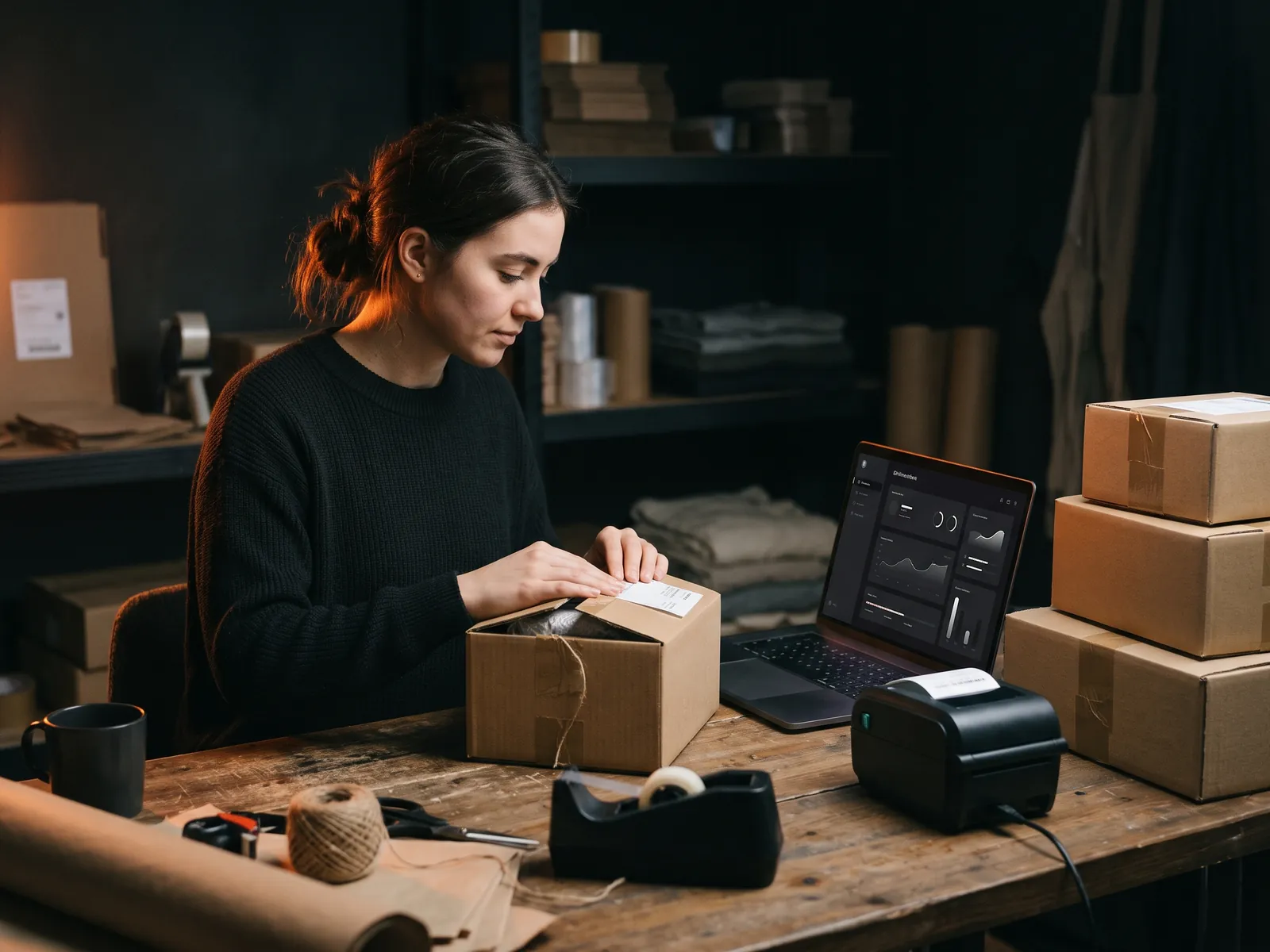
E-commerce website design for Australian businesses selling online: full prices upfront, delivery costs by postcode, PayID and Afterpay at checkout, and an order panel that makes packing day simple.
Free: a 30-minute call, an action plan and a price range in writing.
Delivery costs appear only at the last step and the buyer walks.
SurpriseForced account creation and too many fields on a phone.
FrictionNo visible returns policy, so a new customer doesn't risk it.
DoubtVariants, size guides, stock levels and good photos.
Carrier rates or zones, pick-up option, tracking emails.
Cards, PayID and buy now pay later where it suits.
New orders, packing lists, labels and refunds in one place.
Shopping feeds, e-commerce analytics and consented cart emails.
Products, shipping rules, payments and returns policy
Product, category and checkout pages, mobile first
Custom CMS, payments, carriers and order panel
Real test purchases, refunds and shipping labels
Go live, then a session on running the store
Australian dollars, final for the agreed scope.
A complete store on a custom CMS.
Shopping and search campaigns set up for the store.
A brand store just launching, with its first drop on 11–12 December 2026.
See the case study →Delivery orders on its own website, with a CRM behind it.
See the case study →E-commerce website design in Australia has its own checklist. Shoppers expect to see the full price, GST included, before they reach the checkout. They want to know the delivery cost and time to their postcode, which can differ a lot between Melbourne and Broome. They pay with cards, increasingly with PayID, and for many purchases with Afterpay or Zip. And they've learned to check the returns policy before buying from a business they don't know.
I build online stores that handle all of that from the start, on a custom CMS made for your products and your way of fulfilling orders, without a monthly platform subscription or a stack of paid apps.
Delivery is often where small Australian stores lose sales. A few principles I build in:
The Australian Consumer Law sets the ground rules. Prices shown to consumers should be the total price, including GST and any compulsory fees, and the ACCC has been active on drip pricing, where extra charges appear late in the checkout. Consumer guarantees apply regardless of what your returns policy says, so the policy should reflect them rather than contradict them. Fake reviews and review manipulation are illegal too, so product reviews on your store must be genuine.
On payments, I typically connect a card payment provider, PayID where it suits your bank and provider, and buy now pay later options like Afterpay or Zip if your products and margins suit them. Every option is configured so payment confirmations, refunds and order statuses flow into your order panel and, if you want, a CRM.
KAGENOISHI is a jewellery brand store I built, with its first drop set for 11–12 December 2026. It's just launching, so there's nothing to report yet beyond what was built. Da Diego, a pizzeria in Poland, takes delivery orders on its own website instead of paying a marketplace middleman, with a CRM behind it. Neither is an Australian store, and I'm upfront that I don't have Australian e-commerce clients yet. The building blocks are the same; the carriers, payments and law above are what I adapt for here.
An online store starts from $2,300 in Australian dollars, including design, copy for key pages, the product structure, checkout, payments, shipping rules, analytics and training on your order panel. Large catalogues, wholesale pricing or complex integrations are quoted after a call. Payment is in three stages (30/40/30), the deadlines are in a written agreement, and the store, its code and its domain are yours. If you also sell on marketplaces, see Amazon, eBay and marketplaces, which I deliver with a trusted partner. To start, send a website brief with a rough product count.
With me, an online store starts from $2,300 in Australian dollars. That includes design, the catalogue structure, checkout, payments, shipping rules, analytics and training. Big catalogues or complex integrations are quoted after a short call.
Australia Post, Sendle and StarTrack are the usual choices, with live rates where the carrier supports it or simple zones and flat rates. Click and collect can be added if you have a shop or warehouse.
Yes, where your payment provider supports them and the products suit them. Buy now pay later has fees for the merchant, so it's worth checking it fits your margins. Cards are always included.
Prices shown to consumers should be the total price they pay, so if you're registered for GST it's included, along with any compulsory fees. Your accountant can confirm your GST position; the store displays prices accordingly.
Not for the store software itself, because it's built for you and owned by you. You'll still pay your payment provider's transaction fees and for hosting and domain, which are agreed individually.
Roughly how many products, where you ship and how you take payments today. I'll reply within one business day with a plan and a price.
What do you need most?