



Missed calls: how to stop losing customers
Every missed call is a customer who may now be ringing your competitor. Practical fixes for small businesses and tradies, from a better voicemail to automatic text-back and CRM tasks.
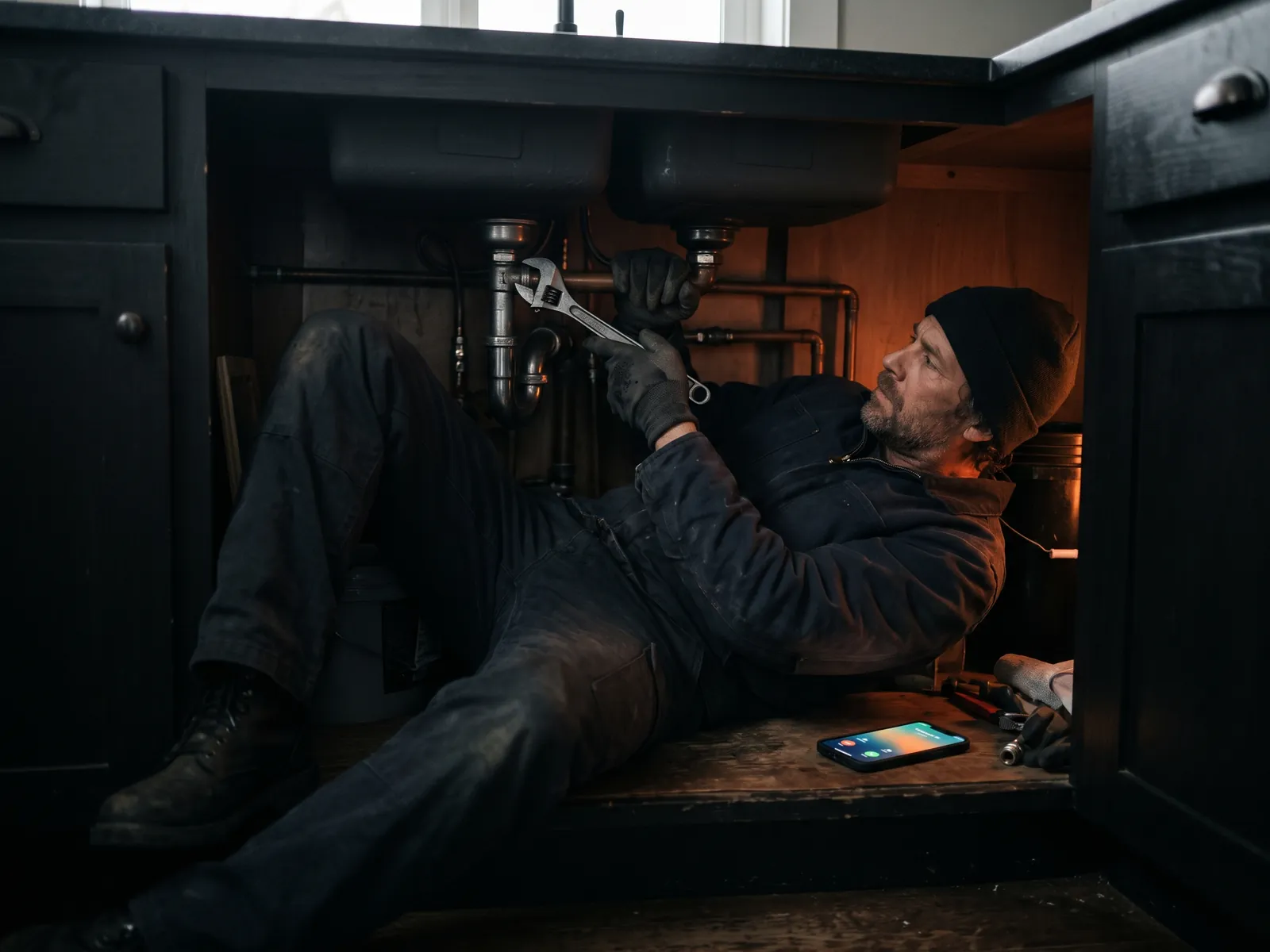
Missed calls are lost customers more often than most owners admit. When someone rings a plumber, a physio or a mechanic and nobody answers, they rarely leave a voicemail. They hang up and call the next business on Google Maps. The fix is not answering every call (nobody under a sink can), but making sure every missed call gets a fast, useful response: an honest voicemail, an automatic text, a task in your CRM and a callback within a set time.
This matters doubly if you pay for ads. A click on a Google Ads call button can cost real money, and an unanswered call throws that spend away. Before you increase the ad budget, plug the hole.
Why people do not leave voicemails
Callers want an answer, not an admin task. Leaving a message means explaining the problem to a machine, trusting it will be heard and waiting with no idea when. Calling the next business takes ten seconds. Mobile users especially just tap the next listing.
So "they would have left a message if it was important" is not a safe assumption. Many of the callers who matter most (urgent jobs, people ready to book today) are exactly the ones who will not wait.
First, find out how many calls you miss
Check your phone's call log or your provider's report for two normal weeks. Count:
- calls that were not answered;
- of those, how many you called back, and how quickly;
- how many came from numbers you did not recognise (likely new customers).
If you run ads, connect calls to their source with call tracking. It shows which campaigns produce calls and which calls nobody picked up. My article on call tracking explained walks through how it works.
Seven fixes, from free to fully automated
1. Rewrite your voicemail. Replace "leave a message after the tone" with something useful: who you are, when you will call back, and an alternative. For example: "You've reached [business name], this is [your name]. I'm on a job right now. Send a text to this number with your suburb and what you need and I'll get back to you within the hour on weekdays."
2. Set a callback rule. Decide that every missed call from an unknown number is returned within an hour during business hours. Put it on a sticky note, a calendar block, or better, a CRM task.
3. Turn on missed-call text-back. Many business phone systems and apps can send an automatic SMS when a call is missed: "Sorry I missed you. I'm on a job and will call back by 2 pm. Reply here with your address and the job if that's easier." People reply to texts far more readily than they leave voicemails.
4. Add a call-back form on your website. Some visitors prefer not to call at all. A short form ("Name, mobile, best time to call, what's the job") placed next to your phone number captures the ones who would otherwise ring once and give up.
5. Use a website chatbot after hours. A simple bot can collect job details at 9 pm and hand them to you in the morning. Not every business needs one; I explain when it pays off in how much a website chatbot costs.
6. Route missed calls into a CRM. If your phone system or call tracking tool can send missed-call details to your CRM, each one becomes a task with an owner and a deadline. No more scrolling through the call log at 6 pm trying to remember who rang.
7. Share the load. In a team of two or three, set the phone to ring a second person after a few rings, or divert to whoever is in the office that day. It sounds obvious, yet many small businesses still have one mobile number tied to one very busy person.
Industry examples
Tradies. The person who answers is often the one doing the work. Text-back plus a fixed callback window (for example, at morning tea and lunch) is usually the most realistic setup. Keep job-intake questions short so you can quote from the text.
Clinics and allied health. Reception is busy with patients at the counter, so calls ring out at peak times. An online booking link in the voicemail and the text-back message takes pressure off the phone.
Hospitality and venues. Calls cluster around service times when nobody can answer. A clear message pointing to online bookings and the most common answers (hours, parking, dietary options) saves both sides time.
Check that the fix is working
After a month, look at the same numbers you counted at the start. How many calls were missed, how many were returned, and how quickly? If the callback time has dropped but the number of missed calls is the same, the problem is capacity, not process: perhaps the phone needs to divert to someone else at peak times, or the ads should run fewer hours on days when you are flat out. If missed calls fall but bookings do not rise, listen to how the callbacks go. Sometimes the fix is a better first sentence, not a better system.
Mind the rules
Automatic texts to people who have just called you about your service are generally treated as part of handling their enquiry. Turning those numbers into a promotional SMS list is a different matter: the Spam Act 2003 requires consent, sender identification and a working unsubscribe for commercial messages. I explain the details in SMS marketing in Australia. Recording calls also has rules that vary by state, so if your system records calls, tell callers at the start and check the requirements in your state with a lawyer.
How I can help
I set up the pieces that turn missed calls into callbacks: CRM tasks, text-back flows where your phone system allows it, call-back forms on the site and call tracking for ads. The CRM setup covers most of it, and if you only want a second opinion on your setup, a free 30-minute call is enough to find the biggest leak.
Work out what
Facebook ads could bring
The profitability calculator shows at what budget and cost per enquiry your ads start making money.

12+ years in online marketing, 100+ clients. I build websites, Google Ads and Meta ads campaigns, CRMs and automations for small and mid-sized businesses. About me →
Missed calls:
what owners ask
Is missed-call text-back legal under the Spam Act?
A reply to someone who has just called you about your service is generally treated as a response to their enquiry rather than unsolicited marketing, but keep it factual and identify your business. Do not add them to promotional lists without proper consent. The Spam Act has nuances, so if you plan to market to callers later, confirm your approach with a lawyer.
Should I use an answering service instead?
For businesses where calls are urgent and frequent, a human answering service can be worth it. For many small businesses, an honest voicemail, an instant text-back and a reliable callback window solve most of the problem at a lower cost. Try the cheap fixes first and measure what is still slipping through.
Can missed calls go straight into a CRM?
Often yes. Many business phone systems and call tracking tools can send call details to a CRM, which then creates a task to call back. The exact setup depends on your phone provider, so I check what your system supports before promising anything.
How do I know how many calls I miss?
Look at your phone's call log for a typical fortnight, or ask your provider for a report. If you use call tracking numbers on your website and ads, the platform will show answered and missed calls by source, which also tells you which marketing channels are being wasted.
Turn missed calls
into booked jobs
Tell me how your phone is set up and who answers it. I'll suggest the simplest fix that fits your day, from a text-back to a CRM task, with a fixed price. Or book a free 30-minute consultation.