



How to choose a web designer
How to choose a web designer without regrets: ten questions to ask, the red flags that predict trouble and what the agreement must cover before you pay a cent.
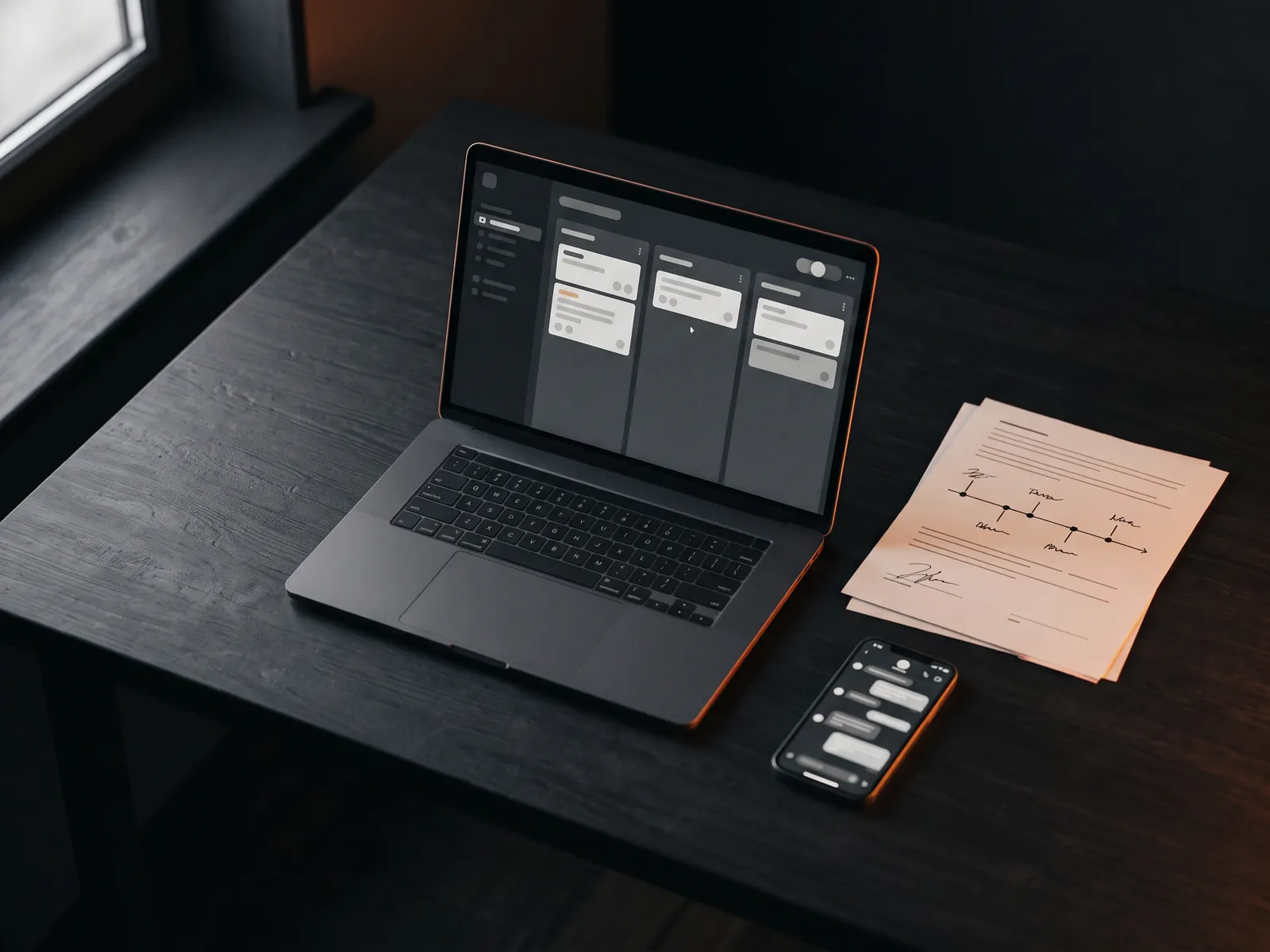
To choose a web designer well, look past the portfolio and ask how they work: who will actually build your site, who owns it at the end, how payment and deadlines are handled, and what happens after launch. Beautiful sample sites are easy to show. A clear written agreement, staged payments and everything registered in your name are what protect you.
Below are ten questions to ask every designer you talk to, the red flags that should make you walk away, and a simple way to compare quotes. They apply whether you hire a freelancer in Hobart, an agency in Melbourne or someone who works remotely, like me.
Ten questions to ask before you hire
1. Who will actually build my website?
With an agency, the person who sells the project is often not the one who builds it. Parts may be outsourced. That is not automatically bad, but you should know. Ask to speak with the person doing the work.
2. Can I see sites you built that bring in work?
Pretty sites are one thing. Ask which projects were built to bring enquiries, what features they have and how the owner updates them. Visit the live sites on your phone, not just the screenshots.
3. Who writes the copy?
Many quotes quietly assume you will supply every word. If the designer writes the copy, ask how: from a brief, an interview, or by rewriting your old site? Copy is what sells, so it matters who does it.
4. What platform will you build on, and what does it cost to run?
A builder subscription, WordPress with paid plugins, or a custom build each come with different running costs and different ways of getting stuck. Ask what you pay monthly after launch and what happens if you want to leave. There is a comparison in WordPress or a custom website.
5. Who owns the domain, the hosting and the code?
The only good answer: your business. Domain registered in your business name, hosting in your account or clearly transferable, and code and content handed over on request. Your .com.au domain should be registered by your business anyway.
6. What exactly is in the price?
Page count, number of unique designs, copywriting, forms, basic SEO, analytics, revisions, training. Ask for it in writing, line by line.
7. How many rounds of changes are included?
Three rounds is a common and reasonable number. Unlimited sounds generous until the project drags on for months. Ask what an extra round costs.
8. What is the deadline, and what if you miss it?
A launch date should be in the agreement. If timing matters to your business, ask whether late-delivery penalties can be written in.
9. How is payment staged?
Paying 100% upfront puts all the risk on you. Staged payments tied to visible progress, such as 30% at the start, 40% midway and 30% at the end, keep both sides honest.
10. What happens after launch?
Who fixes something that breaks, how quickly they reply, whether training is included, and whether ongoing support is optional or a compulsory monthly contract.
Red flags that predict trouble
Walk away, or at least slow down, if you see any of these:
- The domain will be registered in the designer's name "to make things easier".
- No written agreement, or one that does not mention deadlines or ownership.
- Full payment before any work starts.
- Promises of first place on Google or guaranteed numbers of leads. Nobody controls where Google ranks a site, so such promises cannot be honest.
- A long lock-in contract for hosting or maintenance, with exit fees.
- Vague answers about who does the work or what platform you will be on.
- Fake-looking reviews or reviews that cannot be found anywhere else. Under the Australian Consumer Law, fake reviews are illegal, and a business that uses them may cut other corners too.
How to compare quotes fairly
Put each quote into a simple table and fill the gaps by asking questions:
| Question | Designer A | Designer B | Designer C |
|---|---|---|---|
| Pages and unique designs | |||
| Copywriting included? | |||
| Platform and monthly costs | |||
| Domain and code in your name? | |||
| Revision rounds | |||
| Deadline in writing? | |||
| Payment stages | |||
| Support after launch |
The cheapest quote often leaves out copy, revisions or ownership. The most expensive may include layers of project management you do not need. The right choice is usually the one where every row has a clear answer.
Good signs in the first conversation
The first call tells you a lot. A designer worth hiring asks more questions than they answer: who your customers are, which services make you money, where your enquiries come from now, what happens after someone fills in a form. They talk about calls and bookings rather than fonts and animations. They are comfortable saying "you do not need that" when a feature would cost you money without bringing work. And they explain their process in plain English, without hiding behind jargon.
Freelancer, agency or one-person studio?
Each has a place. An agency suits large projects that need many specialists at once. A freelancer can be great value, but quality varies widely and you depend on one person. A one-person studio that runs projects with written agreements combines direct contact with the person doing the work and the paperwork that protects you. There is a broader comparison in marketing agency or freelancer.
How I answer these questions
In fairness, here are my own answers. I build every site myself, by hand or on a custom CMS, and write the copy from your brief. I have built more than 70 full websites and over 200 landing pages, for clients in Canada, Poland and Vietnam; I do not have Australian clients yet, and I work with businesses across Australia remotely. The domain, the code and all accounts are in your name. You get a written agreement with the deadline (late-delivery penalties can be added), three revision rounds, payment in stages of 30/40/30, training and support after launch. Management contracts have no lock-in contract.
You can look through the case studies to see what I build, or read how a project runs on how I work. If you like the answers, the first 30-minute call is free.
Let’s talk
about your business
Before the call I review your website and ads. After the call you get an action plan and a price range in writing.

12+ years in online marketing, 100+ clients. I build websites, Google Ads and Meta ads campaigns, CRMs and automations for small and mid-sized businesses. About me →
Choosing a web
designer: questions
Should I choose a local web designer in my city?
Being in the same city helps if you want face-to-face meetings, but most website work happens on screen anyway. What matters more is clear communication, a written agreement and a designer who understands your local market. Plenty of Australian businesses work well with remote designers, provided calls are booked at sensible times.
Is it a red flag if a designer has no reviews?
Not necessarily. New or small studios may simply not have many yet, and inventing them would be far worse. Look at real work you can visit, ask detailed questions and judge how clearly they answer. A genuine portfolio and a solid agreement tell you more than star ratings.
How much should I pay upfront to a web designer?
A deposit of about a third is common and fair; it lets the designer reserve time for your project. Be cautious about paying everything before work starts. Payments tied to stages you can see, such as an approved design or a working test site, protect both sides.
What should the agreement with a web designer include?
At minimum: what is being built, the price, payment stages, the deadline, the number of revisions, who owns the domain, code and content, and what support is included after launch. If anything you discussed is missing, ask for it to be added before you sign.
Put these ten questions
to me first
Book a free 30-minute call and ask me every question on this list. You get straight answers, and a written quote if you want one.