



CRM for small business: where to start
CRM for small business, step by step: the signs you need one, the five things to set up first, and the mistakes that leave Australian owners paying for software nobody opens.
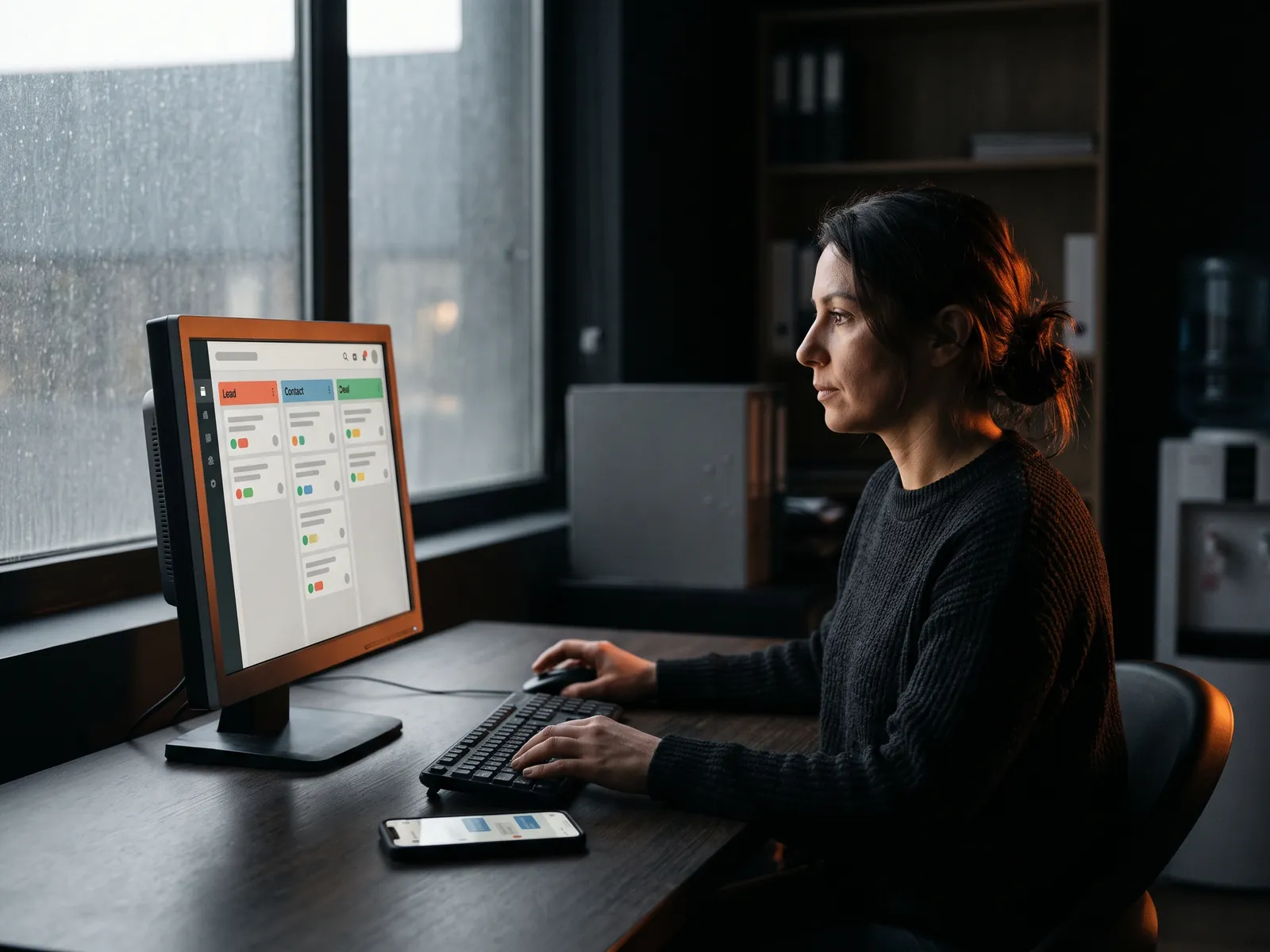
A CRM for small business is simply one place where every enquiry, quote and customer lives, with reminders so nothing slips through. You need one once enquiries come from more than one channel, more than one person answers them, or you have caught yourself searching three apps for a customer's phone number. Start small: one pipeline, automatic capture of every enquiry, and a reminder rule for follow-ups. Everything else can wait.
Most Australian small businesses I talk to do not have a software problem. They have a memory problem. The tradie who quotes from the ute, the clinic receptionist juggling phone and email, the online store answering Instagram messages at 10 pm: all of them rely on someone remembering to call back. A CRM takes that job off people and gives it to a system.
Signs you have outgrown the notebook
There is no turnover figure that says "now you need a CRM". The signals are practical:
- Enquiries arrive through the website form, phone, email, Facebook, Instagram and maybe hipages or Oneflare, and nobody sees them all in one list.
- Quotes go out and nobody follows up, because nobody knows which ones are still open.
- Two staff members call the same customer, or nobody does.
- You cannot say how many enquiries came in last month, let alone which ones turned into paid work.
- Past customers never hear from you again, even though they would happily book a second time.
If two or more of these sound familiar, the cost of not having a CRM is already higher than the cost of setting one up. You just do not see the bill, because it arrives as jobs that quietly went to someone faster.
What to set up first (and what to leave for later)
The biggest mistake is trying to build everything in week one. A CRM that asks for 25 fields per contact gets abandoned by the second Monday. I start every small business setup with five things:
- Automatic capture. Every web form, chat and, where possible, missed call creates a record without anyone typing it in.
- One pipeline with clear stages. For a service business that is often: new enquiry, contacted, quote sent, won, lost. Stages describe what happened, not how someone feels about the lead.
- An owner for every lead. Even in a team of two, each enquiry has one name next to it.
- Reminder rules. A quote with no reply after two or three days creates a task. A new lead nobody touched in an hour sends a nudge.
- A reason for lost deals. A short dropdown (price, timing, went elsewhere, no answer) is enough to learn something every month.
Things that can wait until people use the basics: email sequences, detailed reporting, scoring, integrations with accounting software. They are useful, but they only work on top of clean data, and clean data only appears once the team trusts the system.
Ready-made or custom: the short version
Ready-made systems such as HubSpot, Pipedrive and Zoho are proven, have mobile apps and cover a typical sales process well. You pay a monthly subscription per user to the vendor, usually in US dollars, so the cost can move with the exchange rate. A custom CRM is built around exactly how your business works, with no per-seat licence, and it suits businesses with an unusual process: kitchens priced from a configurator, multi-location bookings, or a calculator on the website feeding straight into the pipeline. I compare the two in detail in custom CRM or HubSpot, and the money side is covered in how much a CRM costs to set up.
| Ready-made CRM | Custom CRM | |
|---|---|---|
| My setup price | $1,100 | $1,500 |
| Ongoing cost | Vendor subscription per user | Hosting, agreed individually |
| Best for | Standard sales process, quick start | Unusual process, website and CRM in one |
| Timeline | About 15 days | About 15 days |
Australian details people forget
A few local points are worth thinking about before you import a single contact.
Privacy. If your business has an annual turnover above $3 million, or you are a health service provider, the Privacy Act 1988 and the Australian Privacy Principles very likely apply to you, and a CRM is exactly where personal information piles up. Even if you are under the threshold, it is good practice to record where the data is stored, who can see it, and to mention the CRM in your privacy policy, particularly when the vendor keeps data on overseas servers. If you are not sure which rules apply, a short chat with a lawyer is money well spent.
Consent for marketing. Having someone's email in your CRM does not automatically mean you may send them newsletters. The Spam Act 2003 has its own consent rules, which I explain in the Spam Act and email marketing. A simple consent field in the CRM saves a lot of guesswork later.
Time zones. If you serve customers in Perth and Brisbane from a Sydney office, reminders and automatic messages should respect the customer's time zone, not yours. A text that lands at 7 am AWST because it was scheduled for 9 am AEDT does not make a great impression.
What a good first month looks like
In the first week after launch, people complain. That is normal: they are learning a new habit. By the third week, the useful signals appear: you can see how many enquiries came in, how quickly each one was answered and which quotes are waiting. By the end of the first month you should be able to answer three questions in under a minute: how many new enquiries did we get, how many did we win, and which ones still need a call.
That is exactly the kind of setup I built for Boreal Kitchens & Cabinetry in Edmonton, Canada, where enquiries from the website's 3D kitchen calculator go straight into the CRM with all the selected options attached. You can read how it works in the Boreal Kitchens case study. Different country, same problem as most Australian service businesses: lots of detailed enquiries and no time to retype them.
How I help
I have set up more than 20 CRMs for small and mid-sized businesses. I work remotely with businesses across Australia, directly with the owner, and everything is registered in your name. You can see what is included on the CRM page, or start with a free 30-minute call to work out whether you need a CRM at all. Sometimes the honest answer is "not yet", and a well-organised shared inbox will do for another six months.
Show me where
enquiries get lost today
30 minutes, free: we map your process from the first call to the invoice and see what’s missing. No obligation.

12+ years in online marketing, 100+ clients. I build websites, Google Ads and Meta ads campaigns, CRMs and automations for small and mid-sized businesses. About me →
CRM for small business:
quick answers
Is a spreadsheet good enough instead of a CRM?
For a sole trader with a handful of enquiries a week, often yes. It stops working when two people answer enquiries, when leads arrive from several places at once or when you need reminders. A spreadsheet cannot ping you that a quote has gone unanswered for three days, and it cannot pull a web form straight in. That is usually the moment to move.
How long does it take to get a CRM running?
A ready-made CRM such as HubSpot, Pipedrive or Zoho, set up properly with forms, stages and reminders, takes me about 15 days including training. A custom CRM built for your process also takes about 15 days. Most of that time goes into agreeing the stages and testing that every enquiry source lands where it should.
Will my staff actually use it?
They will if it saves them effort on day one. Keep the first version small: one pipeline, a few required fields, automatic capture of web forms and calls. Training is included in my setups, and I check in after the first weeks to remove anything people are working around.
Where is my customer data stored?
In an account registered in your name. With a ready-made CRM you hold the subscription directly with the vendor. With a custom CRM the code and database belong to you. Either way you should list the CRM in your privacy policy, especially if the data is stored overseas.
Not sure which CRM
fits your business?
Tell me how enquiries reach you today and who handles them. I'll reply within 1 business day with a suggested setup and a fixed price, or we can talk it through on a free 30-minute call.