Quality
Cheapest leads, fewest sales
One campaign brings enquiries at half the cost of another, yet almost none turn into jobs. Without sales data, you'd scale the wrong one.
Ads and visibility: customers who are looking for your service now or don’t know about it yet.
01 Google AdsEnquiries from people searching for your service right nowfrom $800/mo 02 Social media adsMeta, TikTok, LinkedIn: customers who are not searching yetfrom $800/mo 03 SEOHigher in Google and Maps without paying per clickfrom $690/mo 04 Visibility in ChatGPT and AIYour business in AI assistant answerspart of SEO 05 Amazon, eBay and marketplacesSell where customers already buywith a partnerThe place where a visit turns into an enquiry, and a system that doesn’t lose that enquiry.
01 Web designA website that turns visits into enquirieslanding from $750 02 Online storesCart, payments and shipping, ready for adsfrom $2,300 03 CRMNo enquiry gets lost in a phonesetup $1,100 04 Chatbots and AIThey answer customers, at night too$550 05 Email and SMSCustomers come back instead of forgetting youquoted individuallyPlan and tracking first, budget second. You know what works before you spend more.
01 Strategy and auditKnow where to spend the budget before you spend it$700 02 AnalyticsSee which ad brings in money$470 03 ConsultationsA call about your specific problem$35/h 04 Free auditA quick review and 3–5 priorities to start$0How your business looks and sounds before anyone calls you.
01 Social media managementProfiles that look like a real businesswith a partner 02 Creative and videoGraphics and videos that stop the thumbquoted individually 03 BrandingA logo and style that sets you apartwith a partner Edmonton, Canada
website with a 3D calculator and a CRM
Boreal Kitchens
 Winnipeg, Canada
website and CRM in one system
Adela Strycharz, REALTOR®
 Żywiec, Poland
500+ page website and CRM for a chain
Gładko Tnący Barber
 Warsaw, Poland
website in 4 languages, calculators and CRM
MagCleaning
Leads are not customers. End-to-end analytics follows each enquiry from the first ad click through your CRM to the signed quote or paid invoice, so you see which campaigns bring revenue and which only bring tyre-kickers. It's how you decide where to spend the next dollar with confidence.
Free: a 30-minute call, an action plan and a price range in writing.
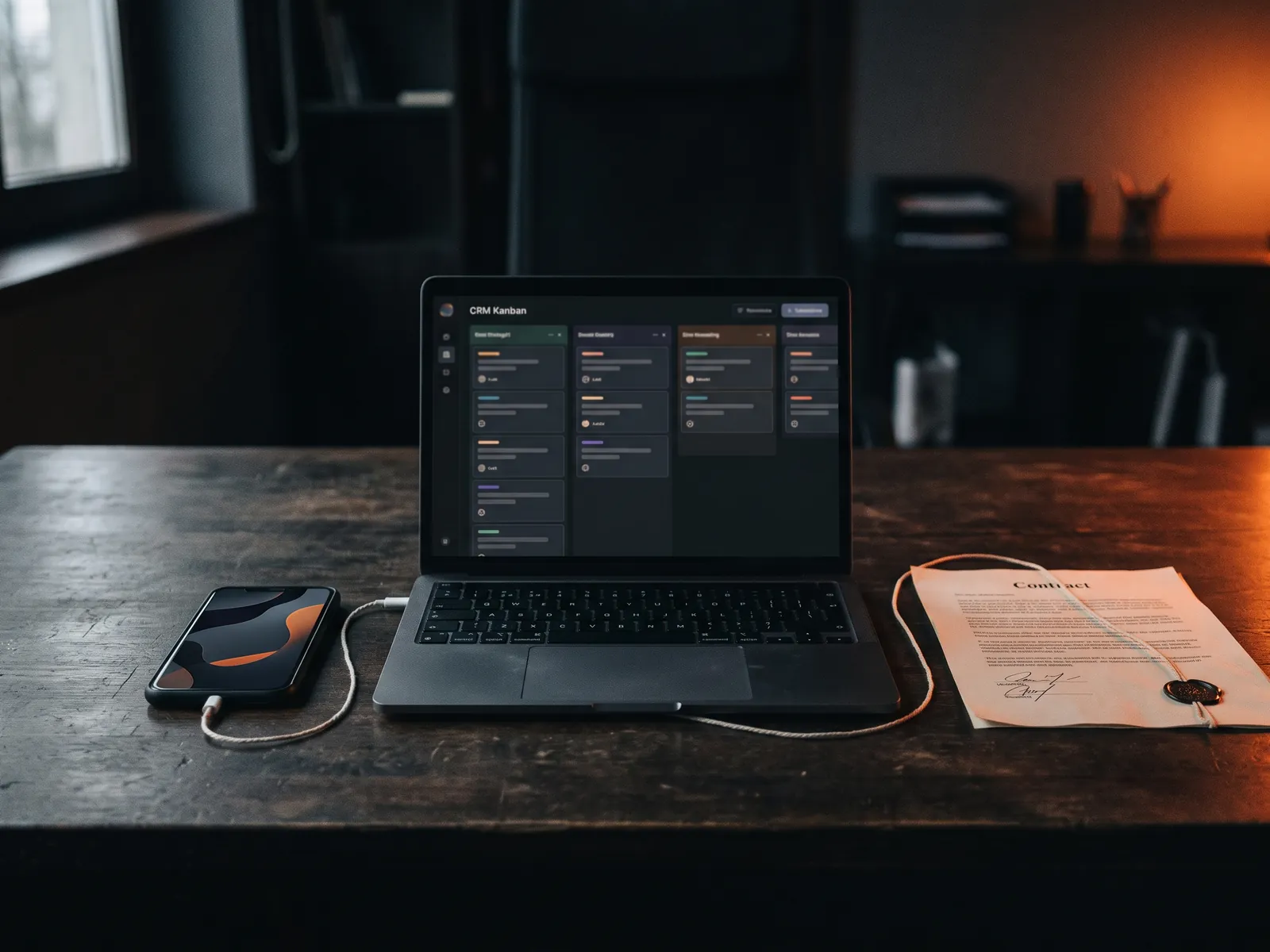
One campaign brings enquiries at half the cost of another, yet almost none turn into jobs. Without sales data, you'd scale the wrong one.
The enquiry arrives by email, gets copied into a spreadsheet, and the information about which ad it came from disappears.
Kitchens, renovations, B2B services: the sale happens weeks after the click. Ads platforms never find out.
Half the customers call, half the deals close over the phone, and none of it links back to marketing.
GA4, Tag Manager and ad conversions counting each enquiry once, with UTM tags on every link you control.
Forms and calls pass the source, campaign and click ID into the CRM along with the enquiry.
Every lead moves through stages: new, quoted, won, lost. With the value of each deal.
Won deals sent to Google Ads and Meta as offline conversions, so bidding learns which leads pay.
A dashboard showing revenue and cost per sale by channel and campaign.
Website with a 3D calculator and planner feeding a CRM, so each kitchen enquiry arrives with its details.
See the case study →Website and CRM in one system, with 8 calculators that capture enquiries.
See the case study →Bookings per location flow into one CRM across a 500+ page website.
See the case study →Prices in Australian dollars. End-to-end analytics combines analytics with a CRM; the exact scope depends on what you already have.
Analytics setup ($470) plus HubSpot, Pipedrive or Zoho setup ($1,100), with sources passed into the CRM.
Analytics ($470) plus a CRM I build for your business ($1,500), tied to your website.
Most marketing measurement stops at the lead: a form filled in, a call made. End-to-end analytics goes further and follows that lead to its outcome. Did it become a quote? Was the quote accepted? How much was the job worth? When you connect those answers back to the original source, you can finally compare channels by revenue, not just by volume.
This matters because lead quality varies enormously. A Meta lead form might bring cheap enquiries from people browsing on the couch. A Google search ad for an urgent service might bring fewer, pricier leads that almost all convert. Judged by cost per lead, the first looks better. Judged by cost per sale, it often doesn't.
Each link has to hold, or the whole chain breaks.
I set up two kinds. Ready-made CRMs such as HubSpot, Pipedrive or Zoho suit businesses that want a known product and don't mind per-user subscriptions. A custom CRM built for your business fits your exact process, has no per-user fees and connects directly to a website I build. Both can do end-to-end analytics. The CRM setup and custom CRM pages explain the differences.
Think of a Melbourne bathroom renovator. Leads come from Google Ads, SEO, hipages and referrals. Jobs range from a small repair to a full renovation worth tens of thousands. Without end-to-end analytics, all leads look equal. With it, the owner may discover that one source brings mostly small jobs while organic search brings the big renovations, and adjust budgets accordingly.
Or a Perth B2B supplier with a three-month sales cycle around EOFY budgets. Clicks in March turn into orders in June. Only a CRM that remembers the source can connect the two.
Even with good tools, the chain often snaps in predictable places. Staff create leads by hand in the CRM and skip the source field. Website forms are replaced with a new plugin that drops the hidden fields. Quotes are sent from an email inbox rather than the CRM, so deal stages are never updated. Click IDs expire before a long sale closes. I set up the system to make the right thing the easy thing: required source fields, automatic lead creation from forms and calls, and a short routine for updating deals each week.
Sending sales data back to ad platforms involves personal information, usually hashed emails or phone numbers. It should be covered in your privacy policy and handled in line with the Australian Privacy Principles if they apply to you. I send only what's needed for matching and document what's shared.
Most businesses start with clean tracking and a CRM, then add offline conversion uploads once enough deals have closed. If you already have a CRM, I'll check whether lead sources are captured correctly. If you don't, a CRM setup is the natural first step, and the CRM pricing page shows the options side by side, including the package that pairs a CRM with a chatbot. For the thinking behind it, read how to measure marketing ROI.
Yes, or at least a structured system where each lead has a source, a status and a value. A spreadsheet can work for very small volumes, but it breaks quickly. A CRM keeps the chain intact and can send results back to ad platforms automatically.
Yes. Call tracking assigns a source to each call, and the call can create a lead in the CRM. When you mark the deal won, the revenue is credited to the campaign that started it.
Sales that happen outside the website, sent back to Google Ads or Meta later. They let the platforms learn which clicks became paying customers, so bidding favours similar people. They depend on storing a click ID with each lead.
It depends on your sales cycle. A cafe catering business might see patterns within weeks. A builder or kitchen maker with long sales cycles needs a few months of closed deals before conclusions are solid.
For a business with a handful of leads a month and one ad channel, simple tracking and a tidy CRM may be enough. End-to-end analytics pays off when you spend meaningful amounts across several channels and deal values vary.
Tell me how leads reach you today and where they're stored. I'll map what's missing between the click and the sale.